
Is Private Tuition really worth it?
There are undoubtedly many objections to the idea of private tuition, especially in an age of compulsory education. Is there any value in paying for a service that schools, be they state-run or independent, must provide by law?
We would argue that there is immense value in private, one-to-one tuition, that far exceeds the financial cost, and more than justifies the time and effort involved. Put simply, private tuition is rigorous, productive, flexible, and very useful in terms of the skills it teaches and the habits of mind it cultivates.

Bust depicting Socrates (c. 470-399 BCE), an ancient Greek philosopher who is widely considered as the founder of Western Philosophy.
Most good private tuition will take the form of a dialogue, rather like the ones Socrates used, as recorded by Plato (although this is not to place humble tutors on par with such thinkers!). Effective Socratic dialogue, where both teacher and student ask and answer questions and consider their respective responses carefully, is a hard intellectual exercise. It cannot, by definition, be passive, which is unfortunately all too possible in most classroom settings. No matter how engaging the teacher or lecturer, it is virtually impossible to have, and keep, all of the students focused on the same idea or content for the duration of the lesson or lecture. In a tutorial, however, there is quite literally nowhere to hide. It is one of the reasons some of the top universities in the world, including Oxford and Cambridge, place this system of tuition at the heart of their teaching model.
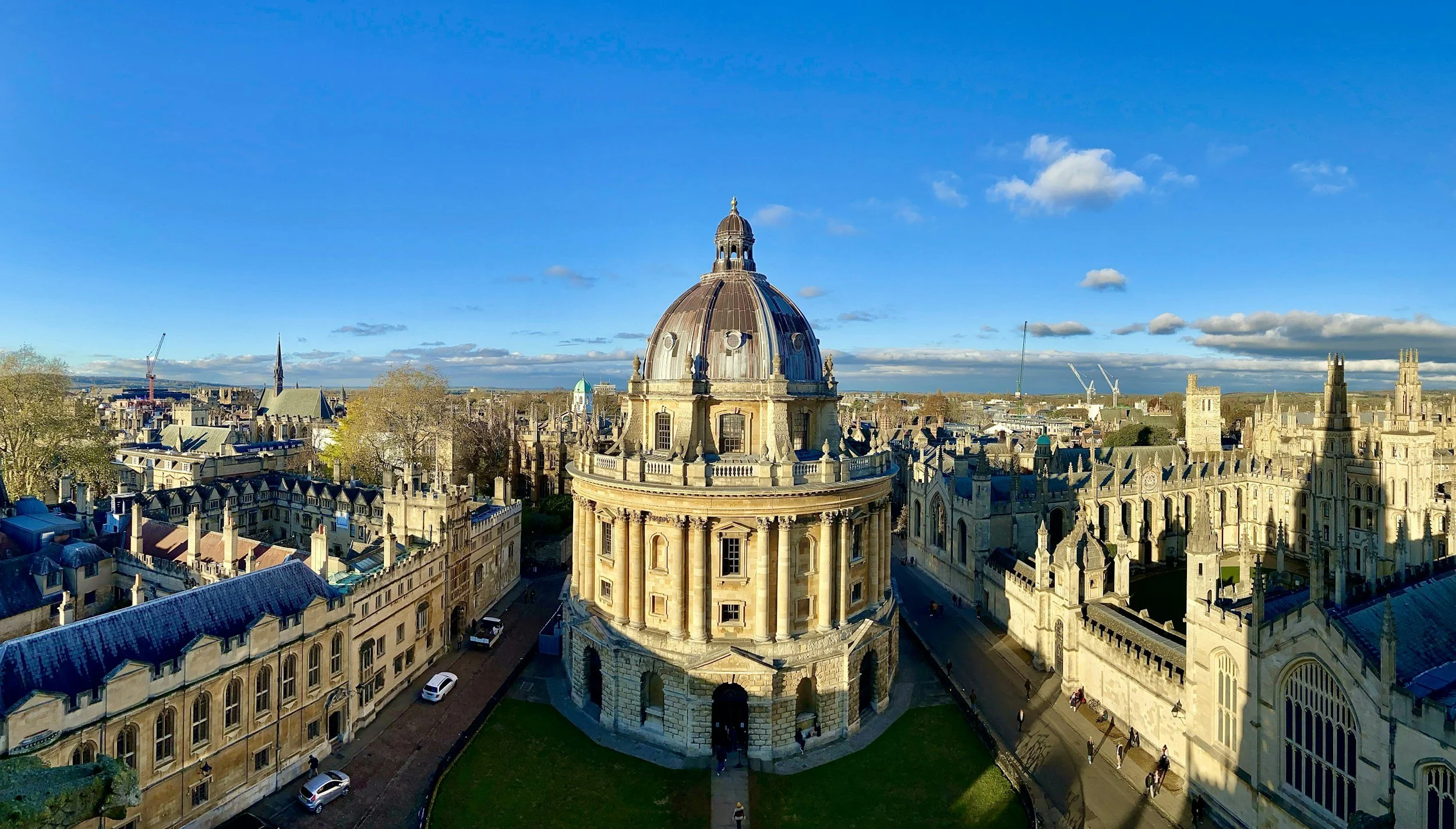
The Radcliffe Camera, University of Oxford
As a result of this intense focus both teacher and pupil can get a lot done rather quicker than they would in a classroom setting. It is possible – albeit not always necessary or desirable – to get through content that would take several lessons in a classroom in the space of a single tutorial. There are, however, undoubtedly times when it is better to spend more time thinking through a topic or question, and this is yet another strength of private tuition: it allows for much deeper insights into complex topics than are possible in a classroom controlled by the need to get through a syllabus or scheme of work. You can’t really hope to understand something as complex as the French Revolution or any other major historical event in a few hour long lessons, where perhaps only half the lesson time will actually be spent building understanding or considering deeper issues, if these are considered at all.
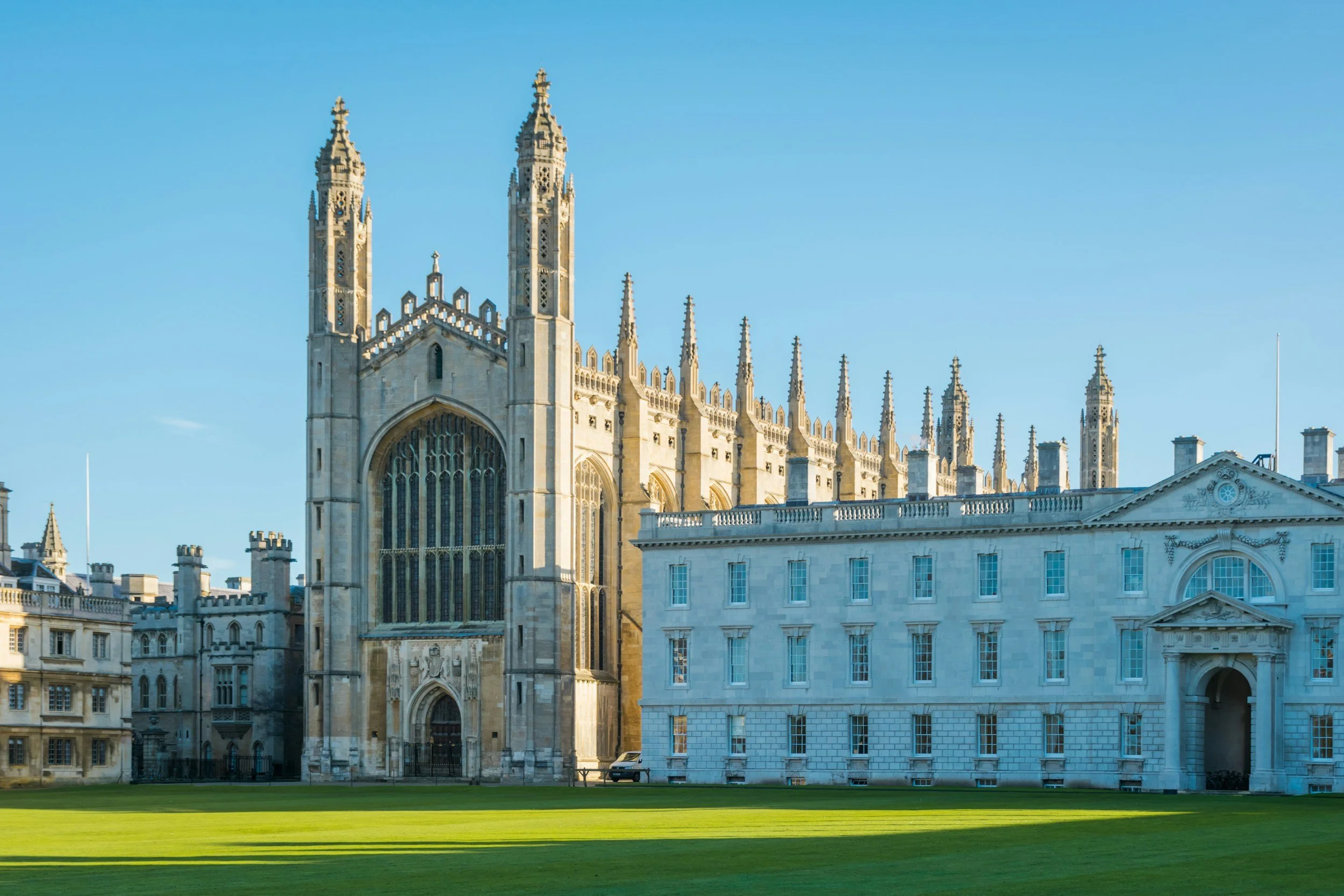
King’s College, University of Cambridge
This brings us to another strength of private tuition. An effective tutor will not be confined to a lesson plan, especially if an interesting point comes up. A good classroom teacher will know when to depart from the plan, but the constraints of a dozen, or even two dozen or more, students working at different rates makes inspired improvisation almost impossible. This is not to say that good tutors will not plan: tutorials are not, and never should be, simply a chat. But effective private tuition has a flexibility that a classroom cannot match. This flexibility comes to fore when the tutor and their student have developed an effective rapport. Again, good classroom teachers can do this as well – some very quickly indeed – but again, they are always constrained by time and numbers. There should never be any possibility of a tutor having to write a report or reference and being stumped for something to say about their students!

Example of a workplace discussion
The final, and for some the most important, advantage of private tuition is a very simple one: it is effective preparation for all manner of professional settings. Job interviews are, at their best, a dialogue between two interested parties, and a student who has experience of considering novel issues in real time. Most workplace discussions and meetings take place one-to-one or in small groups, and rely on understanding issues or data which may only have been acquired or compiled recently. Interviewing clients, pitching ideas for funding, presenting results: all of these things are easier for people who have experience of doing hard intellectual activity ‘on the fly’, and this is a skill which some experience of private tuition undoubtedly helps to develop.
The best part is that you don’t need to spend years having multiple one to one sessions every week in order to see the impact of private tuition - although obviously if you think it would be useful to do this, we’d be more than happy to help! Try it for a few sessions. We think you’ll be pleased with the results.
